
Last updated November 17, 2026




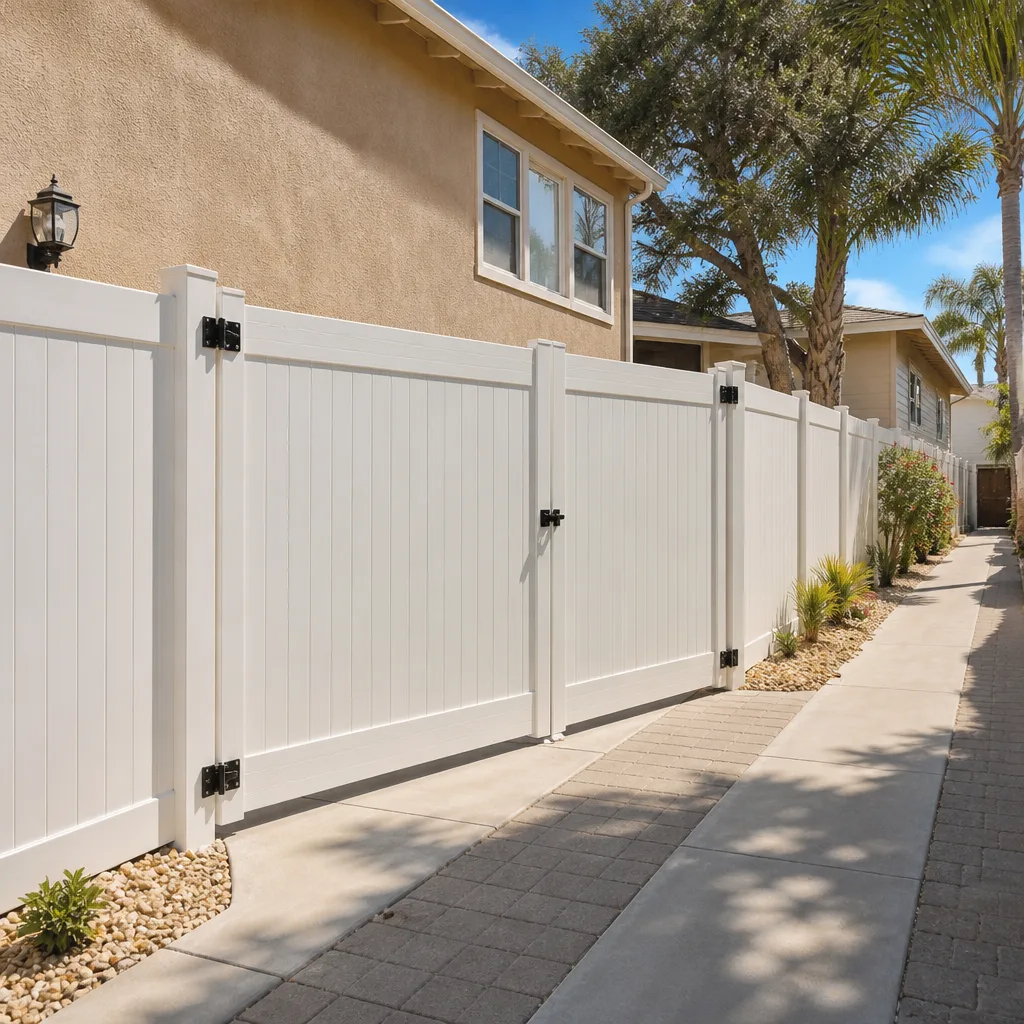



Free written scope consultation - allowances, timeline, and change-order rules on paper before a single trade is scheduled
Construction Warning Signs: A Kendale Lakes Homeowner’s Reference Guide
Stucco cracking is so ordinary in South Florida that most homeowners file it under cosmetic and move on. That habit is exactly what makes early structural warnings so easy to miss here. The cracks that matter aren’t the dramatic ones; they’re the small, repeating patterns a contractor learns to read at a glance, often on homes built before 2002. In this guide we’ll walk you through how to tell cosmetic stucco checking from the crack geometries that point to foundation or framing movement, what efflorescence really says about water inside your block walls, how flat and low-slope roofs fail differently than pitched roofs, and the interior humidity clues most people blame on their AC. You’ll also get a triage sequence for when you spot something: who to call, what to document, and how to get a straight answer without getting upsold.
Quick Answer
The most serious construction warning signs in a Kendale Lakes home are diagonal cracks radiating from window and door corners, stair-step cracks in block walls, white powdery efflorescence that returns after rain, and persistent musty odors that don’t clear after ventilation. These usually point to structural movement or active water intrusion, not normal settling, and are worth a professional inspection before they grow.
Styles & brands we work with
- Kitchen remodeling
- Bathroom remodeling
- Home additions & ADU
- Roofing
- Windows & doors
- Driveway & pavers
- Fence
Table of Contents
- How to Read Stucco Cracks: Cosmetic vs. Structural
- Efflorescence: What White Staining Says About Water Inside Your Walls
- Flat and Low-Slope Roof Warning Signs in Kendale Lakes
- Interior Humidity Clues That Point to Envelope Failure, Not Your AC
- Sticking Doors and Windows as Structural Indicators
- Site Drainage and Settlement Around Your Foundation
- What to Do When You Find a Warning Sign: The Triage Sequence
- How to Document What You’re Seeing
How to Read Stucco Cracks: Cosmetic vs. Structural
Stucco on a concrete block home moves. It expands and contracts with heat and moisture, and hairline checking in the finish coat is normal. The pattern is what separates cosmetic from concerning, not the presence of a crack. A contractor reads crack geometry first, width second, and location third.
Here’s how we sort them:
- Hairline checking: Fine, map-like cracks in the finish coat only, no visible gap, no offset on either side. Usually cosmetic and tied to stucco curing and thermal movement.
- Vertical cracks: Often at control joints or where block courses meet. Frequently benign, but worth watching if they widen.
- Diagonal cracks from window and door corners: These are the ones that get our attention, especially in homes built before 2002. A 45-degree crack running away from a corner opening usually means stress concentrating at that opening, which can point to foundation movement or framing issues above.
- Stair-step cracks: Cracks that follow mortar joints up a block wall in a zigzag pattern are a classic sign of differential settlement. These deserve professional evaluation.
- Horizontal cracks: Less common in block but serious when they appear, often tied to lateral pressure or wall movement.
Width matters too. A crack you can slide a credit card edge into and that has widened over a season is a different animal than one that’s stayed the same for years. Take dated photos, compare them a few months apart, and let the pattern tell you whether something is active. In our experience walking Kendale Lakes properties, the active cracks are the ones that matter, and they’re the ones worth a free inspection.
Efflorescence: What White Staining Says About Water Inside Your Walls
Efflorescence is the white, powdery residue you sometimes see on block, stucco, or pavers. It’s salt from the masonry pushed to the surface by moisture moving through. A single bloom after a heavy rain isn’t alarming. Efflorescence that keeps coming back in the same spot, especially after dry weather, is telling you there’s a moisture source inside the assembly that hasn’t dried out.
In block construction, which is most of the housing stock here, that source is usually one of a few things:
- Roof or flashing leaks that travel down wall cavities before showing up as a stain.
- Window and door perimeter leaks, particularly around openings more than 15 to 20 years old where sealant has aged out.
- Irrigation overspray hitting walls repeatedly, which drives water into the stucco skin.
- Rising damp at the base of a wall, where grade or a patio has been built up against the block with no break.
A pattern worth flagging: efflorescence that appears in a vertical stripe directly below a window, or a horizontal band running along the base of a wall where a patio or walkway meets stucco. Those aren’t cosmetic. They’re a map of where water is entering. If you scrub it off and it returns within a month, treat that as active water intrusion and get it checked. Left alone, this is the mechanism behind the musty odor problem in the next section, and it’s much cheaper to stop early.
Flat and Low-Slope Roof Warning Signs in Kendale Lakes
A lot of homes here have flat or low-slope roof sections, and those fail differently than pitched shingle roofs. You won’t get missing tabs flying off. You’ll get ponding, seam separation, and slow interior staining that shows up weeks after the rain that caused it. Roofing advice written for pitched roofs will miss all of it.
Walk your roof perimeter from the ground, or from a ladder with help, and watch for these signs:
- Ponding water that’s still standing 24 hours after rain. Slight ponding is common on low-slope; ponding that never drains is a problem with slope or drains.
- Blistering or bubbling on the membrane surface. Trapped moisture under the surface lifts the sheet.
- Open seams or lifted edges at the perimeter. Low-slope roofs rely on lapped and adhered seams; when those peel, wind-driven rain gets straight in.
- Rust on metal edge trim and fasteners. Often first sign that water is sitting where it shouldn’t.
- Interior ceiling stains that reappear after every storm even when the roof “looked fine” from outside.
- Sagging between supports. This can point to saturation of the deck below.
If you’re already considering a replacement rather than a repair, the material choice matters as much as the installer. We work with the industry’s most-warranted shingle brands and low-slope membrane systems, and we’ll tell you plainly which system suits your roof geometry. Roofing on a low-slope home in Kendale Lakes is a different job than on a pitched one, and it should be quoted as one.
Interior Humidity Clues That Point to Envelope Failure, Not Your AC
The most common misdiagnosis we hear is “the AC isn’t keeping up.” Sometimes that’s true. But there’s a specific cluster of symptoms that point to your building envelope, not your cooling system: condensation on interior walls, especially on the back of exterior-wall cabinets or behind furniture; a damp, musty smell that gets worse after rain, not after you turn the AC off; and humidity that stays high even on mild days when the system should easily keep up.
Here’s how to sort it:
- AC problem: Humidity high when the system runs, drops when it cycles longer; condensate line issue; low refrigerant; undersized unit.
- Envelope problem: Humidity high regardless of system performance; condensation on wall surfaces; musty odor concentrated in one room or on one wall; smell intensifies after heavy rain and fades in dry spells.
If your symptoms fall in the second column, no thermostat adjustment will fix it. That pattern usually means water is entering somewhere in the wall or roof assembly and the house is drying itself through your interior air. Left alone, chronic interior moisture damages drywall, feeds mold, and shortens the life of your finishes. In our experience, getting to the source early saves a much larger remediation later. Diagnosing water entry can involve the roof, the windows and doors, or site drainage, which is why we look at all three together rather than guessing.
Sticking Doors and Windows as Structural Indicators
A door that starts sticking in summer isn’t automatically a structural warning. Wood and stucco move with humidity, and some seasonal binding is normal. The concern is a door or window that’s getting progressively worse, or one that sticks when neighboring openings don’t. A single balky opening often points to the opening; several at once usually points to movement in the structure around them.
What to watch for:
- Multiple doors or windows binding over the same season, especially on one side of the house.
- Doors that won’t latch after years of closing cleanly.
- Visible gaps at the top or strike side of a door frame that weren’t there before.
- Windows that show daylight around the frame after they’ve aged, which can indicate frame movement as well as failed sealant.
- Cracks in paint along door and window corners that reopen after repair.
Check the opening, then the wall, then the foundation level. If you’ve got several symptoms appearing at once, that’s your signal to bring someone in. Windows and doors that are getting older are also a good reason to look at replacements, not just repairs; we work with PGT, CGI, and ECO Window Systems for impact-rated and energy-efficient options when the time comes, and we’ll tell you when repair still makes more sense than replacement. But first, confirm the opening isn’t just moving with the wall.
Site Drainage and Settlement Around Your Foundation
Water and grading cause more structural symptoms in this climate than any other single factor. Block foundations on sandy South Florida soil handle moving water well when the site drains properly. When it doesn’t, you get differential settling: part of the house moves down more than the rest, and you start seeing the crack patterns we covered earlier.
Walk your property after a heavy rain and look for:
- Standing water within 3 feet of the foundation wall. This is the top-of-list issue.
- Soil that’s visibly lower along one wall than another. Indicates washout or settling.
- Downspouts that discharge too close to the house. They should route water away from the wall, not into a bed directly against it.
- Pooled water on driveway or patio slabs that’s channeling toward the house instead of away.
- Cracks opening in driveways, patios, or walkways that widen each wet season.
- Mulch beds built higher than the base of the block wall. They hold moisture against stucco and can drive efflorescence and rot into the wall base.
Fixing grade, extending downspouts, and re-working the hardscape around a home’s perimeter is often the least expensive form of foundation protection, and it’s the one most often skipped. If your driveway or patio is part of the problem, we handle driveway & pavers work designed with drainage in mind, so the finished surface sheds water away from the structure rather than against it.
What to Do When You Find a Warning Sign: The Triage Sequence
Finding a crack, a stain, or a smell and doing nothing is the expensive path. Overreacting to a benign hairline is wasted money too. Here’s how we think you should sort it out before calling anyone.
- Stop and document first. Photograph the crack or stain with something for scale (a coin or a measuring tape) and note the date. This gives you a baseline to tell whether it’s active.
- Look for a partner symptom. A crack with no companion signs is usually cosmetic. A crack paired with a sticking door, a returning efflorescence stain, or a musty odor is a real concern.
- Rule out obvious water sources. Irrigation overspray, downspouts, a leaking hose bib, or a clogged AC drain can mimic structural symptoms. Fix those first and watch for a change.
- Decide what kind of expertise you need. Wall and roof water entry, stitching, and structural movement are a contractor and engineer question. If someone tells you a growing diagonal crack is just “settling,” get a second opinion from an independent structural engineer.
- Get a scope in writing. Whoever you call should walk the property with you, explain what they see and why, and hand you a line-item scope for the repair. A verbal estimate is not a scope.
- Compare the scope, not the price. If one contractor says “repair the stucco” and another says “find and seal the water source, then repair the stucco,” you’re looking at two different jobs. Compare what’s covered, not the number at the bottom.
- Pull the permits if the work needs them. Structural work usually does; cosmetic stucco patching usually doesn’t. Ask your city’s building department what’s required for the specific scope.
One reason a single-source contractor helps here: when a warning sign could be a roof problem, a window problem, or a drainage problem, you want one person to look at all three. That’s how we treat it, from the roof to the driveway. If that inspection turns into a real project, we handle home additions & ADU work, roofs, windows, kitchens, and driveways under one scope, so you’re not the one coordinating between trades while a water source keeps leaking.
How to Document What You’re Seeing
Documentation is the difference between a clear conversation and a guessing game. When we walk a home in Kendale Lakes, we’re reading patterns across time. Your own records make that possible.
- Photo pairs, not single shots. The whole point of a photo is a before and after. Space them 3 to 6 months apart.
- Log the weather at each photo. A crack that only looks wider after heavy rain is telling you something different than one that widens in dry weather.
- Track a smell by room and time. Note which rooms and which days the musty odor peaks; that map narrows the source fast.
- Keep receipts and permits. Any prior repairs, especially to the roof or windows, give the next professional a starting point.
- Note sticking openings on a calendar. A door that sticks all summer and loosens in winter is seasonal; one that’s been tight since a given month is telling a different story.
None of this requires expertise. It just requires a phone, a calendar, and the habit of looking. If you’d rather have a professional read the file with you, that’s what our free estimates are for.
Common Mistakes to Avoid
- Caulking over a crack before diagnosing it. Sealant hides the pattern that tells a contractor whether it’s active. Photograph it first, then seal.
- Blaming the AC for every humidity problem. Replacing a working unit won’t fix a leaking wall assembly. Check for musty odor and post-rain humidity spikes before calling an HVAC tech.
- Scrubbing efflorescence off and forgetting it. If it returns in the same spot, it’s active water intrusion. The stain is a symptom, not the problem.
- Ignoring grade and downspouts because “the yard drains fine.” Water can pool against a foundation for months without visibly flooding. Walk the perimeter after a rain and look.
- Hiring for a symptom instead of the source. A roof leak that shows up as a stucco crack will keep leaking if you only fix the crack. Get to the source before you repair the finish.
- Treating a diagonal crack at a window corner as cosmetic because “everyone here has cracks.” The commonness of stucco cracking is exactly why the structural ones get missed.
- Skipping permits on structural repair because it seems like a small job. Unpermitted structural work can complicate insurance and resale later, and it’s worth asking your building department up front.
See the difference
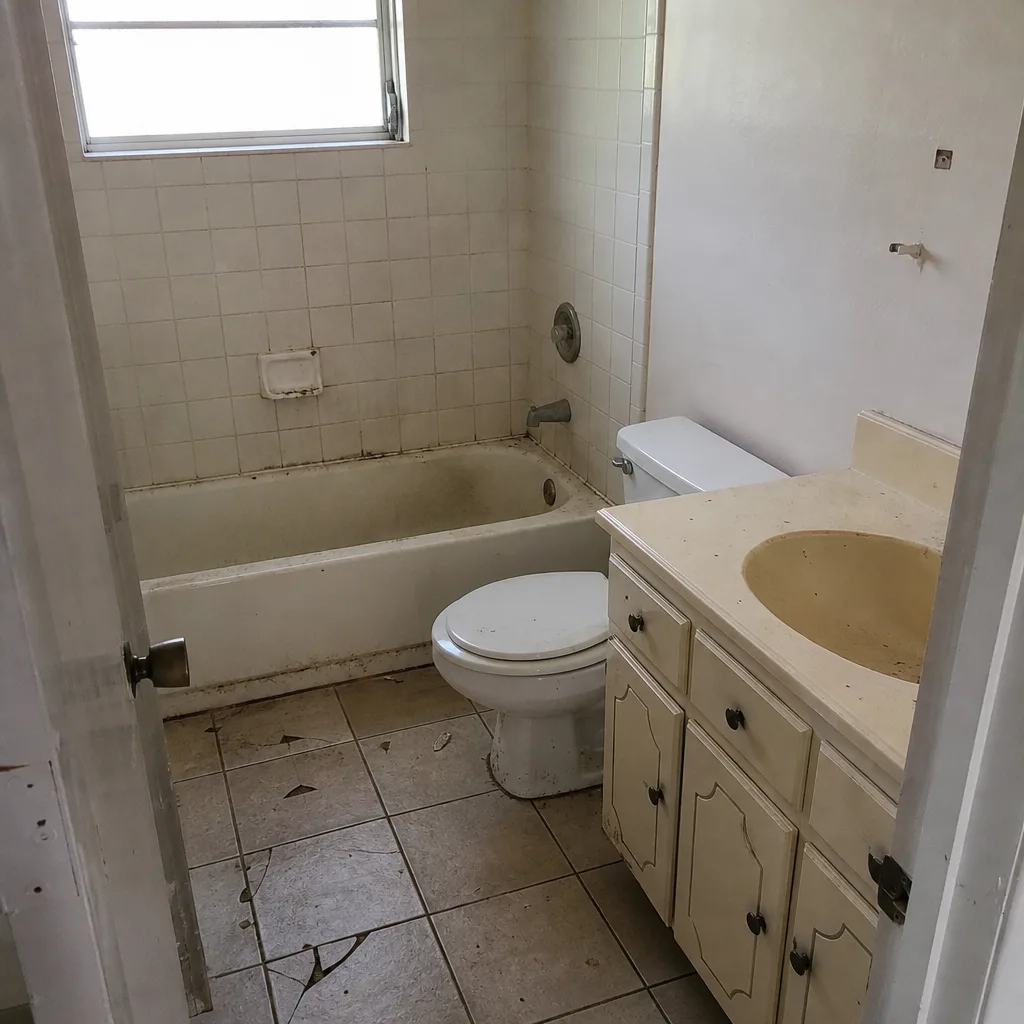 Before
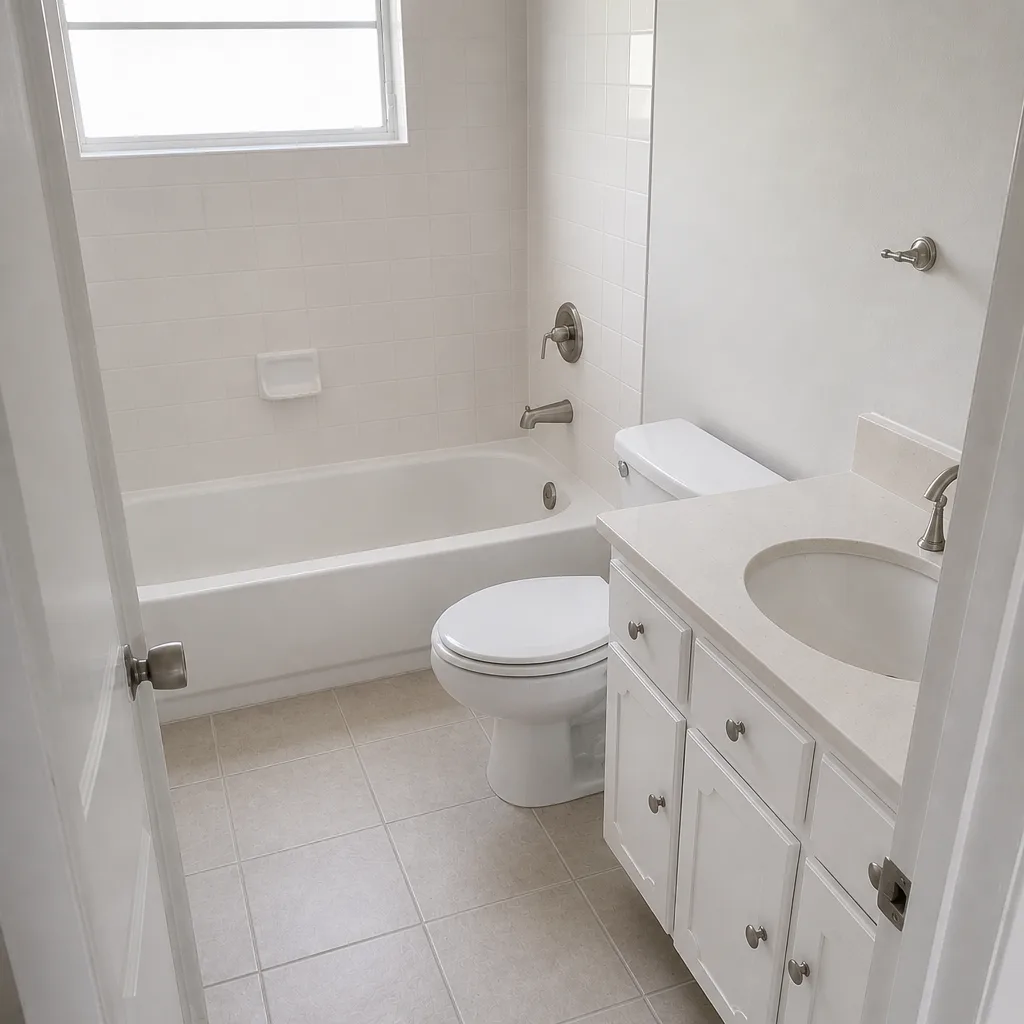 After
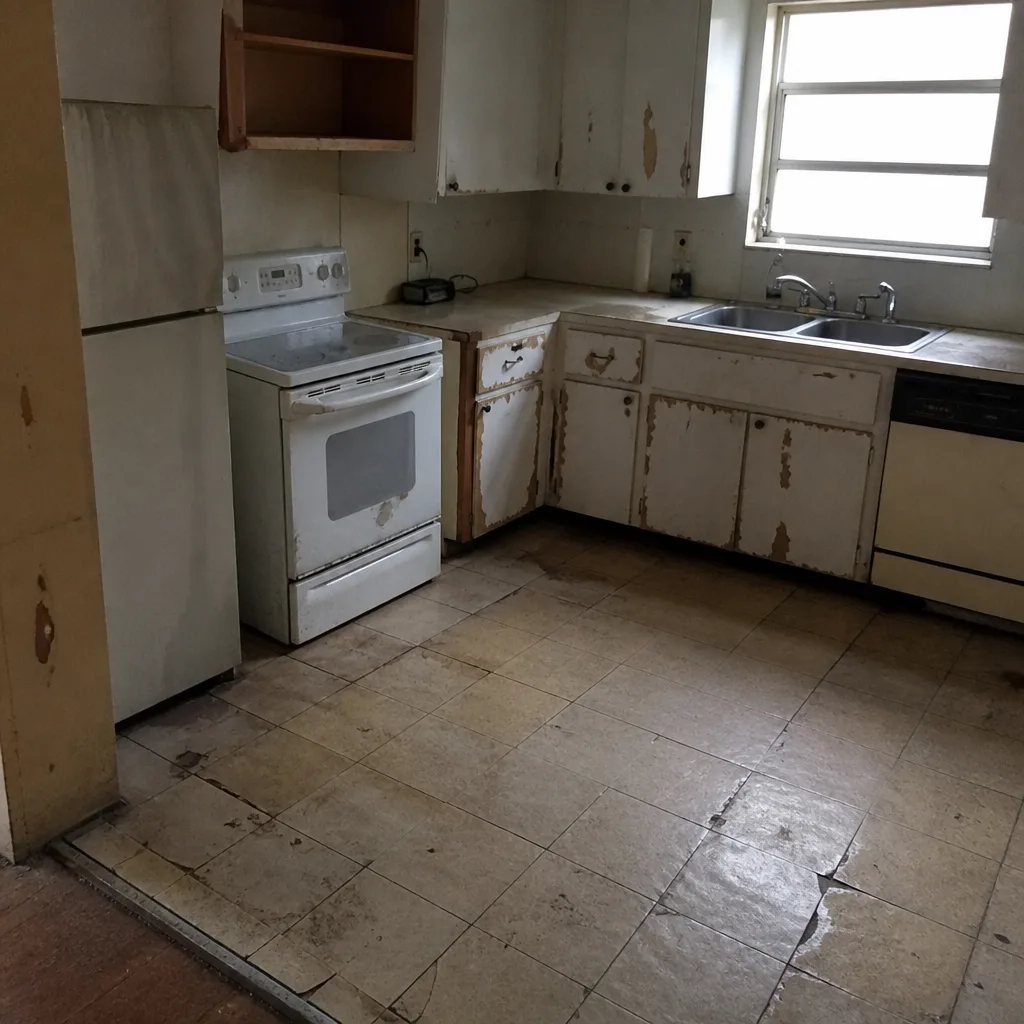 Before
 After
 Before
 After
When to Call a Professional
Call a professional when you see diagonal cracks radiating from window or door corners, stair-step cracks in a block wall, efflorescence that returns in the same spot, ponding on a flat roof that won’t drain, multiple sticking openings on one side of the house, or a musty odor that doesn’t clear after rain stops. Those are the signs that don’t self-resolve and get more expensive the longer you wait. A contractor with broad scope, not a single-trade specialist, is the right call because water entry and structural movement don’t respect the lines between roof, window, and drainage problems. Kendale Lakes Construction offers free estimates in Kendale Lakes. Call (866) 531-4751. We answer 24/7. Fast dispatch from 7am to 7pm, Sunday through Friday. Our technicians have up to 10 years of experience, and we work with our manufacturer partners so we’re specifying the right material for the job, then standing behind it.
Frequently Asked Questions

Stair-step cracks in block walls and diagonal cracks that radiate from window or door corners are the most serious signs, because they usually point to differential settlement or framing movement rather than stucco curing. Combined with a sticking door on the same side of the house, they’re worth a professional look right away. Call (866) 531-4751 for a free estimate and an honest read on what you’re seeing.
Hairline checking in the finish coat is normal, and so are small seasonal cracks tied to heat and moisture. What’s not normal is a crack that widens over time, one that follows mortar joints in a stair-step pattern, or one that appears at the corner of an opening. When the pattern changes, get it checked.
Yes, in most cases a returning efflorescence stain means there’s an active moisture source inside the wall. Common culprits in block construction are window perimeter leaks, roof flashing failures, and irrigation overspray, and the fix is to find and seal the entry point, not keep cleaning the stain off. Call (866) 531-4751 to schedule a free inspection.
If the musty odor spikes after rain, if condensation appears on interior walls, or if humidity stays high regardless of how the system runs, the problem is likely the building envelope rather than the AC. If humidity climbs only when the system is off or running poorly, the HVAC is a better first place to look. Either way, it’s worth an inspection to separate the two.
One sticking door is usually just seasonal movement or a failing latch. Several doors and windows binding on the same side of the house in the same season is the pattern worth flagging, especially paired with any cracks. That combination is a structural-movement question, not a hardware question.
Bring dated photos of the crack or stain, a note on whether it’s changed over the seasons, any prior repair records or permits, and a short list of companion symptoms like sticking openings or post-rain odors. That file helps the contractor read the pattern faster, and it makes the scope you get back more specific. For a free estimate, call (866) 531-4751. Our free estimates come with a line-item scope, so you know exactly what you’re being quoted on.
The Bottom Line
The construction warning signs we’ve covered in this guide share a common trait: they’re quiet. Cracks, efflorescence, musty odors, ponding water, and sticking doors almost never arrive as a single dramatic event. They accumulate through rainy seasons and hot summers, and the homes that stay healthy are the ones where someone was paying attention. Read the pattern in your crack, not the crack alone. Treat returning moisture stains as active water intrusion. Distrust any contractor who tells you a structural symptom is just settling and hands you a verbal scope. Document what you’re seeing, call when a companion symptom shows up, and get a line-item scope before any money moves. If you’re ready to have someone read your house with you, Kendale Lakes Construction serves Kendale Lakes and the surrounding area through Kendale Lakes Construction, and we handle fence installation and every other scope around the property. Call (866) 531-4751. We answer 24/7. Fast dispatch from 7am to 7pm, Sunday through Friday. Free estimates, one point of contact from permit to punch list, and real brands with real choices rather than a take-it-or-leave-it spec.
Written by the team at Kendale Lakes Construction.